The Smart Engine

Coded clinical logic, read by the strongest AI models available.

The Smart Engine is the technology at the center of our medical platforms. It joins the proprietary CPT and ICD-10 code language our engineers have built over many years with top-tier large language models, so client intake becomes expert-level clinical and financial calculation.

Deterministic first
Code decides the price, the code match and the rule. The AI reads its output.
300+
Lab tests coded for medical-necessity qualification
65
ICD-10 codes and modifiers in our evidence suite for an FDA-cleared diagnostic device
7
Specialist-panel prompts, each held to a strict response schema
Thousands /hr
Contract-cited reason codes an hour for underpaid 835 lines
01Built in house

A proprietary index of the CPT and ICD-10 codex.

Our engineers wrote a specialized index of the American medical codex, the CPT and ICD-10 valuation rules that physicians and payers use to describe every condition, test and service. The index is tied to payer Local Coverage Determination rules, so the engine knows which diagnoses qualify which laboratory tests, device studies and next-step exams as medically necessary.

Its intake logic is coded to reference hundreds of medical journal findings, and thousands of engineering hours have gone into the path from a patient's own symptom report to qualified, documented, payer-ready orders. Today the index holds medical-necessity qualifications for more than 300 laboratory tests and a full evidence suite for the 65 ICD-10 codes and modifiers of an FDA-cleared autonomic and vascular testing device.

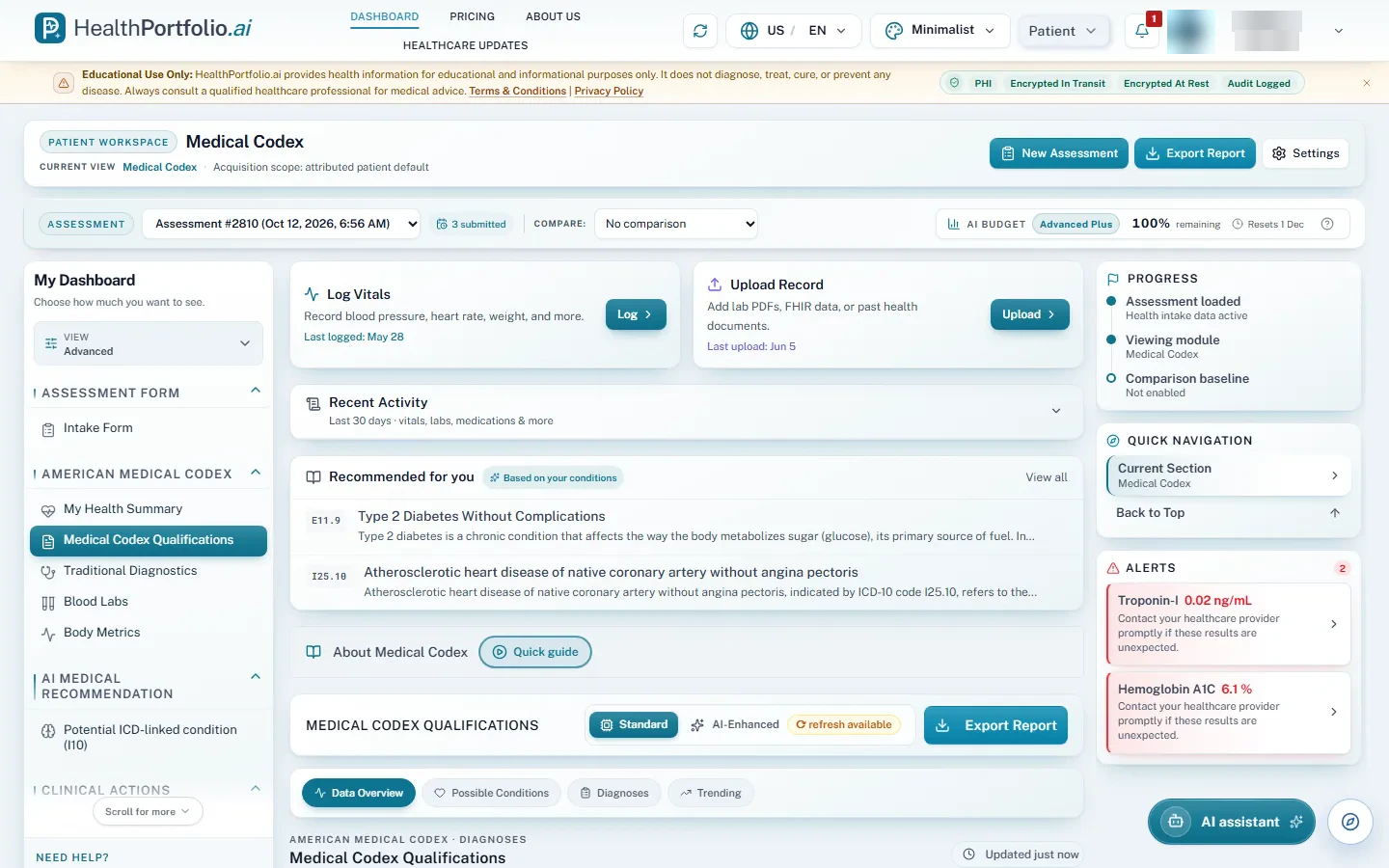
healthportfolio.aiHealthPortfolio.ai diagnostics ranked by the coded engine
02How it works

Five stages from intake to a signed decision.

01 · Input

Structured intake

The patient or clinician completes a structured intake: demographics, symptoms by body system with severity and recency, vitals, medications, family history and labs. Every answer is captured as data.

02 · Rules

Coded analysis

The rules engine maps the intake to CPT and ICD-10, scores each possible condition against its cardinal symptoms and checks medical-necessity rules for every test it may suggest.

03 · Privacy

De-identification

More than 70 field-level and pattern filters strip names, emails, phone numbers, Social Security numbers and every other identifier before any data leaves our system for an AI model.

04 · AI layer

AI review

Purpose-built prompts present the coded case to a simulated specialist panel, and the model must answer in a strict JSON schema. Malformed answers are rejected and never shown.

05 · Output

Clinician sign-off

Results reach the physician as candidates with match scores and plain reasons. The physician approves, prescribes or rejects, and those ratings teach the system which suggestions help each patient.

03In production and in beta

One engine across our medical platforms.

HealthPortfolio.ai Medical Codex
Live

HealthPortfolio.ai

The Medical Codex maps symptoms to ICD-10-coded conditions through a Bayesian differential engine. Risk models (Framingham, ASCVD, STOP-BANG, KDIGO, ATP III), CYP450 drug-interaction checks and USPSTF 2024 screening rules run beside it, and an AI-Enhanced mode returns 10 to 15 differential diagnoses for clinician review.

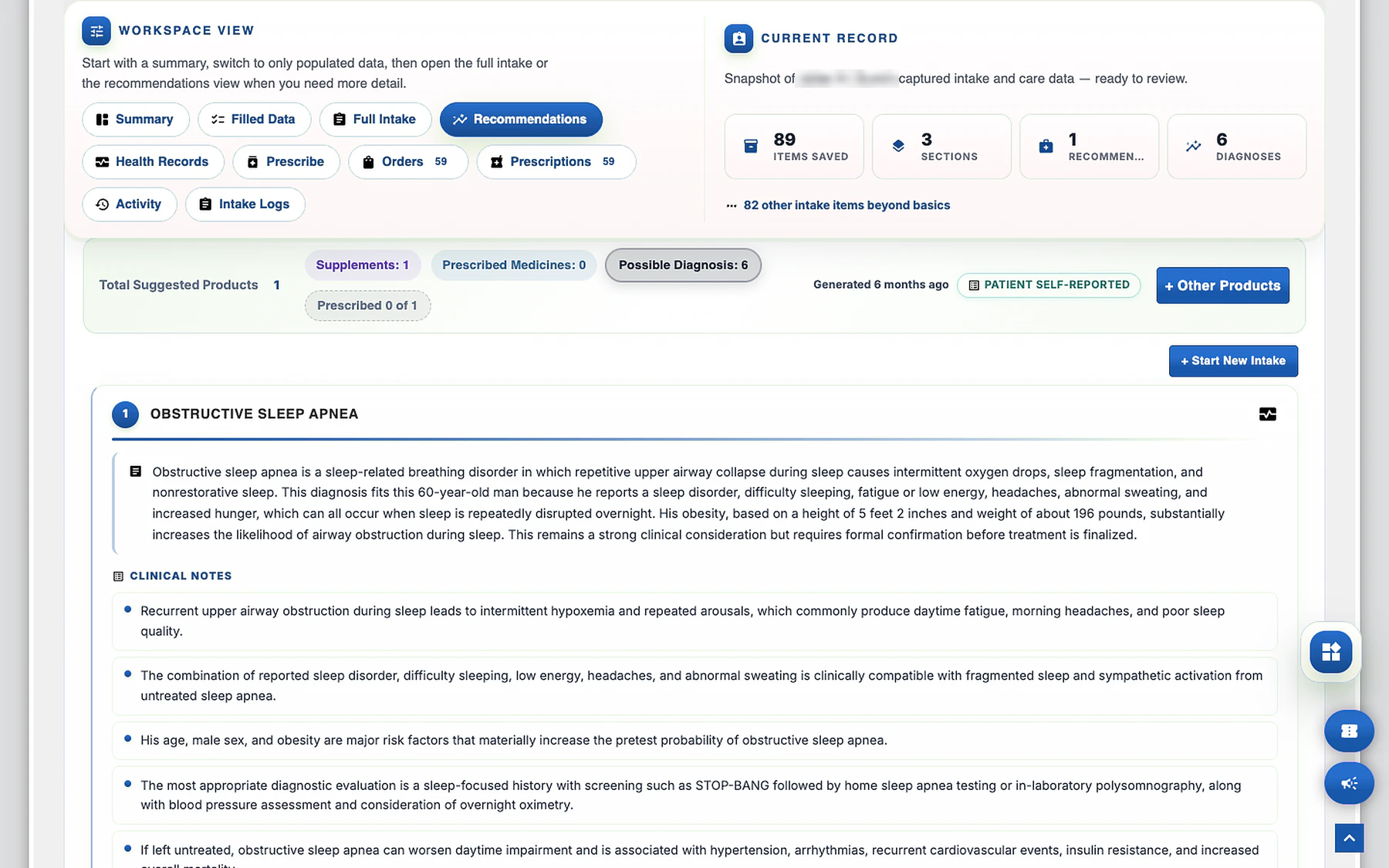
MediGrade possible diagnoses
Beta

MediGrade

After a patient's intake is saved, the AI reviews symptoms, medical history and lab values in about 2 to 5 minutes and returns matched products, compounded prescription options and a numbered list of possible diagnoses with notes on how to confirm each. Every prescription carries ICD-10 codes, and an admin console tracks AI cost, call volume, cache-hit rate and error rate by model.

Instructive Wound Care AI wound imaging
Beta

Instructive Wound Care

Computer vision measures wounds from bedside photos, calibrated to millimeters by a standard measurement sticker, and classifies granulation, slough, eschar and epithelial tissue. CPT coding concordance and ICD-10 linking document medical necessity for each claim, and every AI measurement waits for clinician approval.

04AI in revenue recovery

Thousands of contract-cited reason codes an hour.

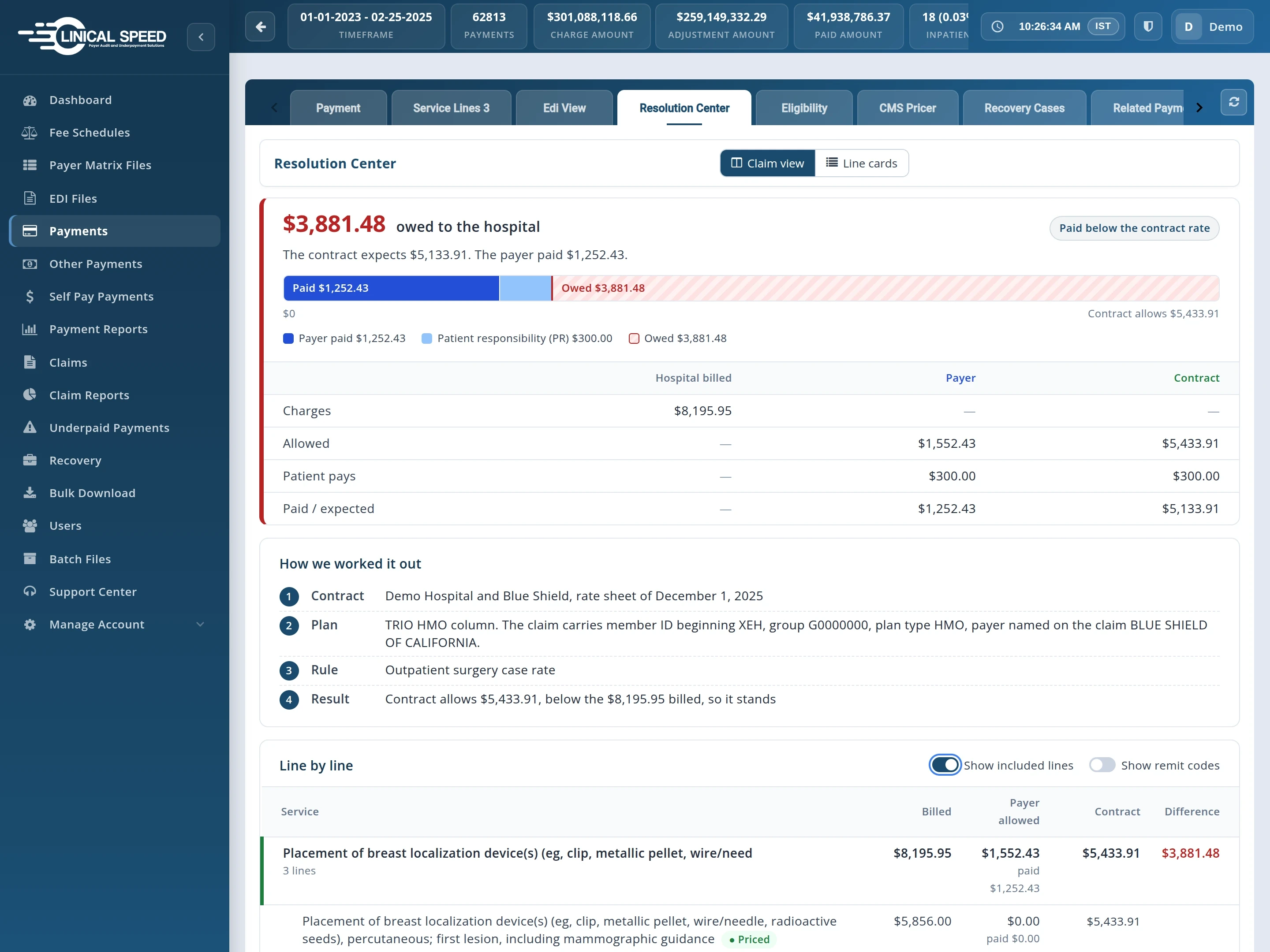
The same discipline runs in Clinical Speed's recovery pipeline. Our engineers code each hospital's payer contracts and payment schedules into structured policy, and the platform prices every 835 remittance line against it. For each underpaid line, our AI writes the reason code and justification for appeal, citing the clause, the rate column, the rule and the calculation, and it produces them at a rate of thousands an hour.

The platform then assembles payer-specific appeal packages and routes them toward payer compliance pathways once the hospital has reviewed the findings.

  • The contract clause and effective date
  • The rate column and fee-schedule cell
  • The modifier or bundling rule applied
  • Expected payment, actual payment and the amount owed
clinicalspeedaudits.comClinical Speed underpaid line with its contract basis
Live
05Control

How we keep AI accurate in medicine.

  • Deterministic code decides every price, code match and medical-necessity rule. The AI reads its output.
  • Identifiers are removed before any AI request.
  • Every response is validated against a strict schema, and failures are discarded.
  • Prompts are versioned, and a version change refreshes stale results for every user.
  • Results are cached, so a repeat request returns instantly.
  • AI usage, cost and error rates are tracked by model and call type.
  • A licensed clinician signs off on every clinical suggestion, and a hospital reviews every finding before appeal.
06The people behind the engine

Core-trained engineers who mastered large language models.

The Smart Engine comes from engineers who built medical rules engines, device integrations and contract calculators by hand for years before large language models were ready for clinical work. When the models matured, the team folded them into systems whose code logic was already proven, which is why our AI works from coded facts and our software checks every answer it gives.

Tapabrata Biswas, our Biomedical Informatics Director, and Debasis Kar, our Chief Engineer, lead that work with Beto Paredes.

Tapabrata Biswas
Tapabrata Biswas
Biomedical Informatics Director
Debasis Kar
Debasis Kar
Chief Engineer / Founder
Beto Paredes
Founder
Beto Paredes
Founder and CEO

See the Smart Engine run on real screens.

The Software Review shows HealthPortfolio.ai, MediGrade, Instructive Wound Care and Clinical Speed screen by screen, under a mutual NDA.